Can large language models (LLMs) fact-check health misinformation on social media?
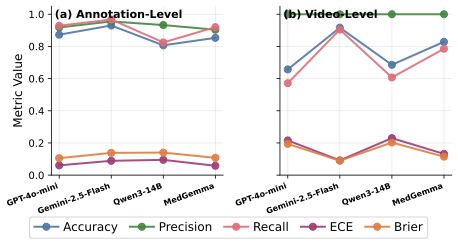
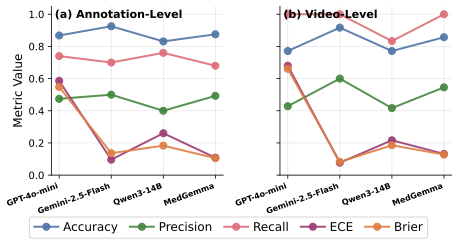
RELIANCE evaluates whether general-purpose LLMs such as Gemini, GPT-4o, Qwen, and Llama Guard can detect inaccurate and harmful reproductive health information in real-world TikTok videos. Gemini-2.5-Flash performs best overall, but accuracy drops by about 15% when a model moves from verifying a single clinician-highlighted claim to judging an entire video, and most models are better at flagging harmful information than at catching factual inaccuracies.
What is the RELIANCE dataset?
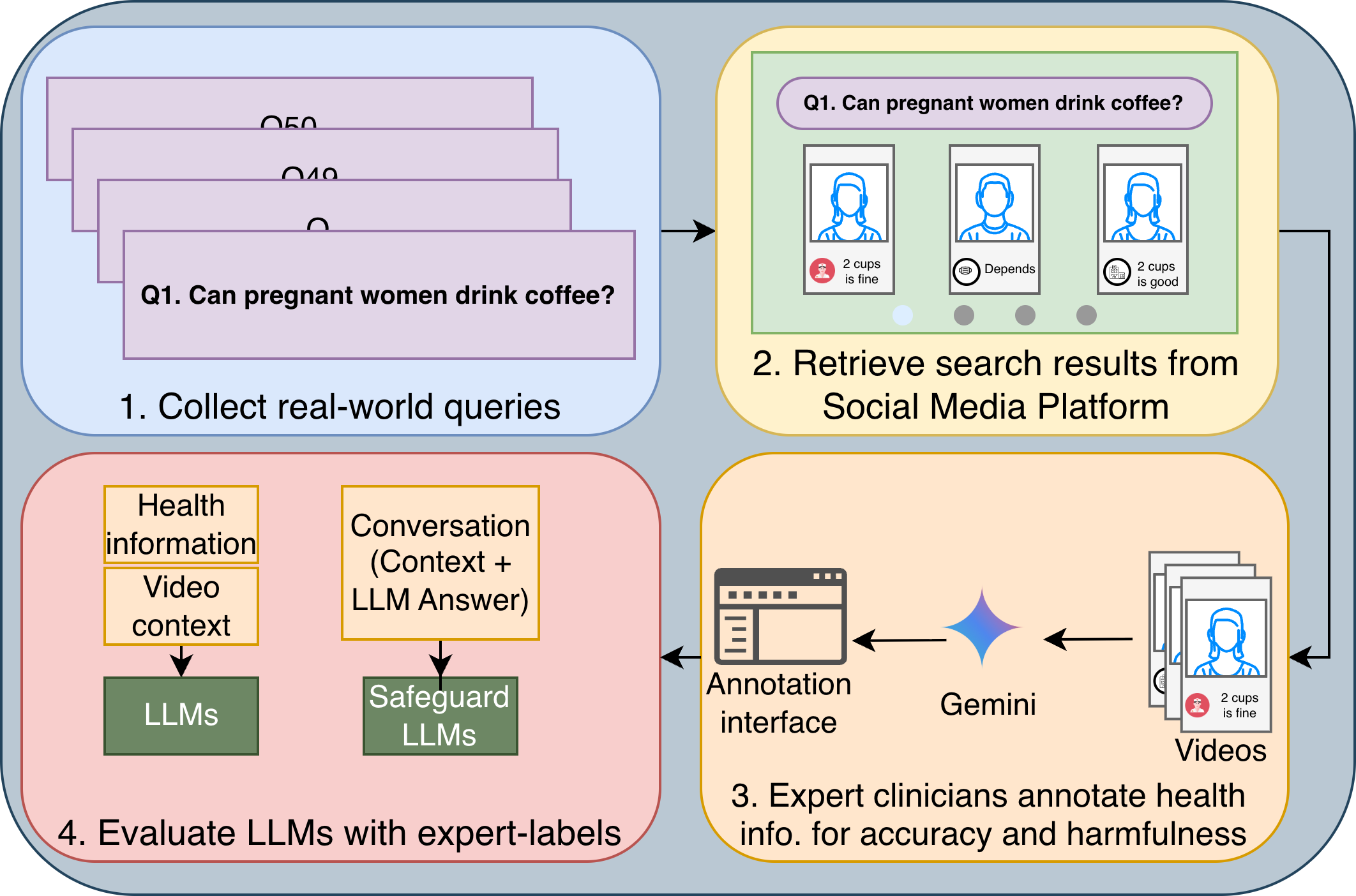
RELIANCE (Reproductive hEaLth Information Access in oNline Content Environments) is an expert clinician-annotated dataset of reproductive health information surfaced by TikTok search. It contains 409 annotated sentences or paragraphs from 336 videos across 56 clinician-reviewed peripartum queries, each labeled separately for medical inaccuracy and harmfulness by expert clinicians in obstetrics, gynecology, and internal medicine.
What reproductive health topics does RELIANCE cover?
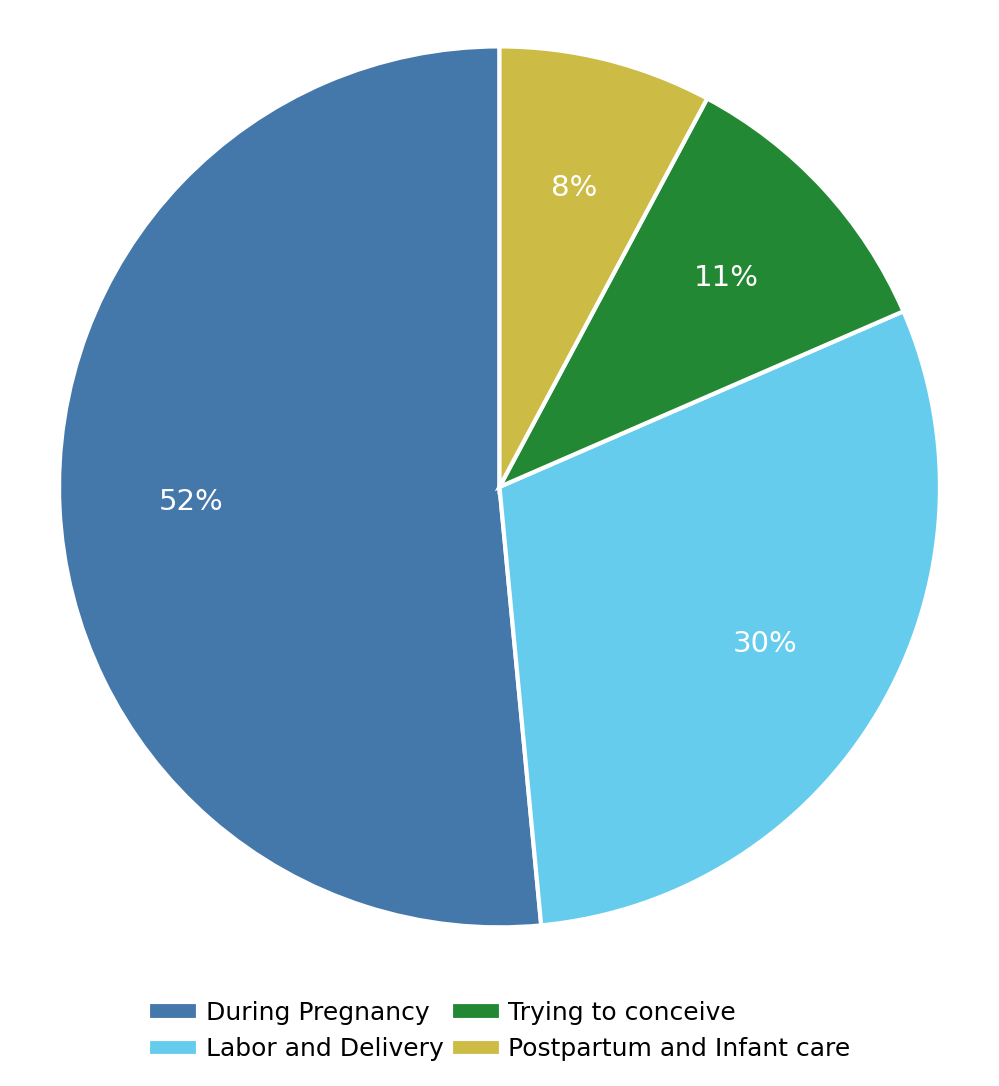
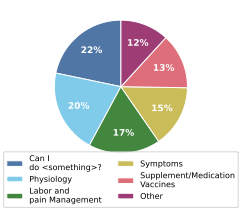
The 56 clinician-reviewed search questions span four stages of the peripartum period, namely trying to conceive, during pregnancy, labor and delivery, and postpartum and infant care, and seven reproductive health categories: physiology; symptoms; diet and exercise; supplements, medications, and vaccines; labor and pain management; open-ended "can I do this?" questions; and other. Most annotated claims come from questions about pregnancy and about labor and delivery.
How were the videos and transcripts collected?
Each clinician-reviewed question was issued as a TikTok search query and the top six video results were collected, yielding 336 videos. Collection used TikTik, the semi-manual tool released alongside the dataset on GitHub. Clinicians then read the video transcripts and marked the sentences or paragraphs carrying medical information, producing the 409 annotated spans. Clinicians agreed on 82.97% of accuracy labels and 86.91% of harm labels.
Is popular social media health content more medically accurate?
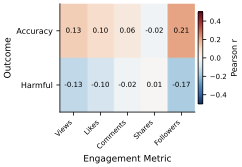
No. Engagement metrics such as views, likes, shares, comments, and creator followers show no strong correlation with medical accuracy or harmfulness. Popularity is not a reliable signal of whether a reproductive health video contains accurate information.
Do LLM safeguard and guardrail models handle reproductive health content reliably?
Not consistently. RELIANCE tests safeguard models including Llama Guard and the omni-moderation model and finds they flag reproductive health queries and responses inconsistently. The omni-moderation model, for instance, flagged the query "How much kicking should a pregnant woman feel?" as violence, showing that content-moderation guardrails need domain-specific context for reproductive and maternal health.
How is RELIANCE different from medical exam or question-answering benchmarks?
Medical exam and question-answering benchmarks test models on curated, text-only questions with known answers. RELIANCE instead uses the health information people actually encounter: transcripts of real TikTok videos returned by ordinary search queries, where claims sit inside longer narration and where inaccurate information may or may not be clinically harmful. RELIANCE keeps inaccuracy and harmfulness as separate labels for exactly that reason.
Which models does RELIANCE evaluate?
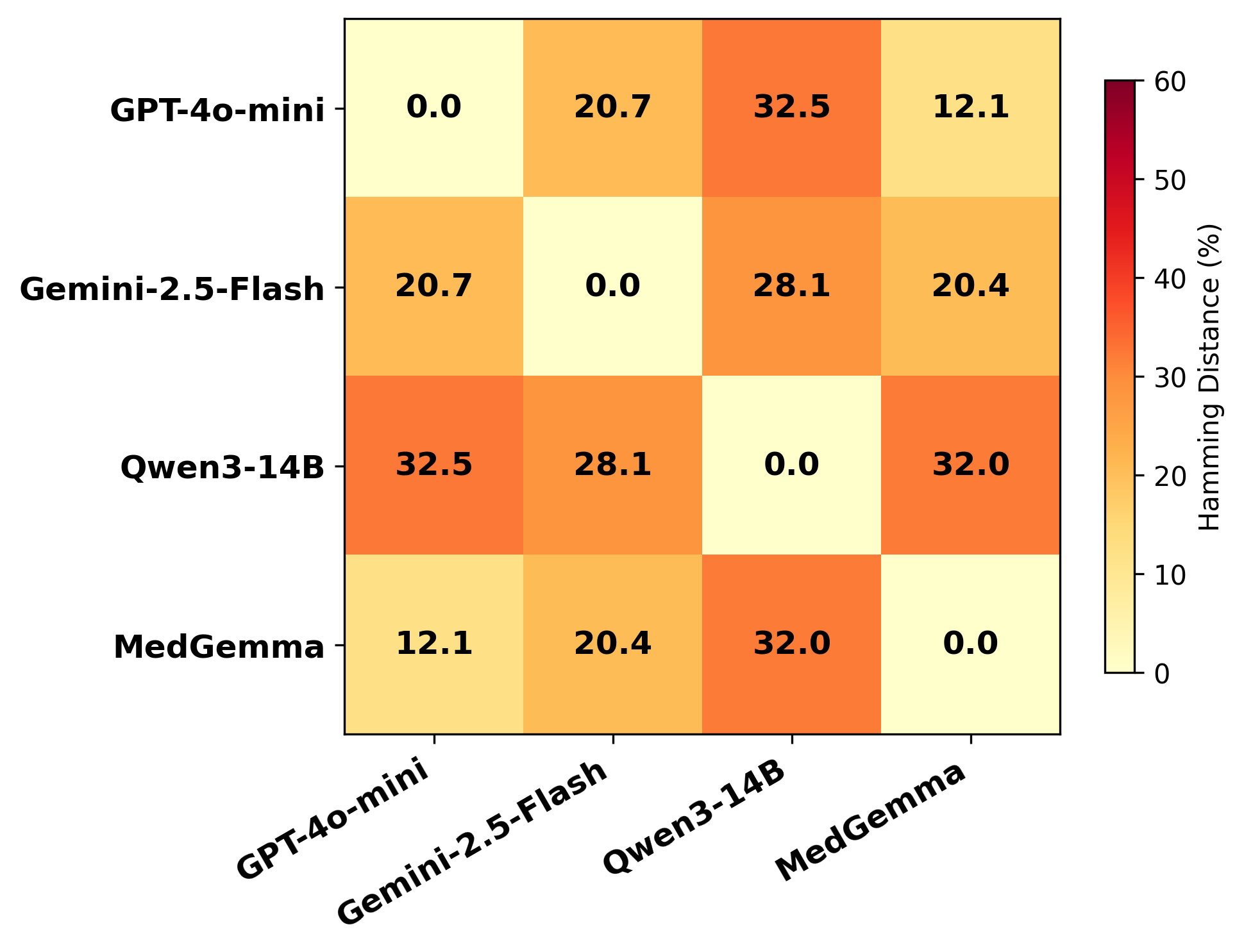
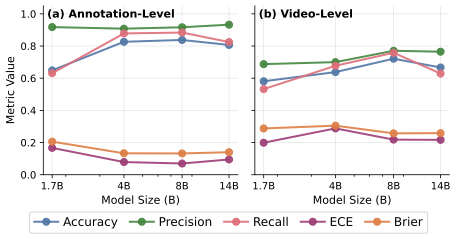
The benchmark covers general-purpose LLMs including Gemini, GPT-4o, and Qwen on two tasks: claim-level verification of a single clinician-highlighted sentence or paragraph, and video-level detection over a complete transcript. It separately evaluates safeguard models, including Llama Guard and the omni-moderation model, on user queries, video transcripts, and model responses. Comparing Qwen models of different sizes shows that scaling within a single model family did not consistently improve reproductive health fact-checking.
Why does health misinformation on TikTok matter for pregnancy and postpartum care?
Nearly 59% of American adults under 30 use TikTok, and many turn to social media for pregnancy, postpartum, and fertility questions. About 30% of the health claims surfaced by search in this dataset are inaccurate, and roughly half of those are clinically harmful, the kind of misinformation that can cause real adverse consequences during the peripartum period.
How can I access and cite the RELIANCE dataset and paper?
The dataset and collection tool are openly available on GitHub, the full paper is on arXiv, and the published version is in the KDD '26 proceedings. RELIANCE was accepted at the KDD 2026 Datasets and Benchmarks track. For questions, contact us.